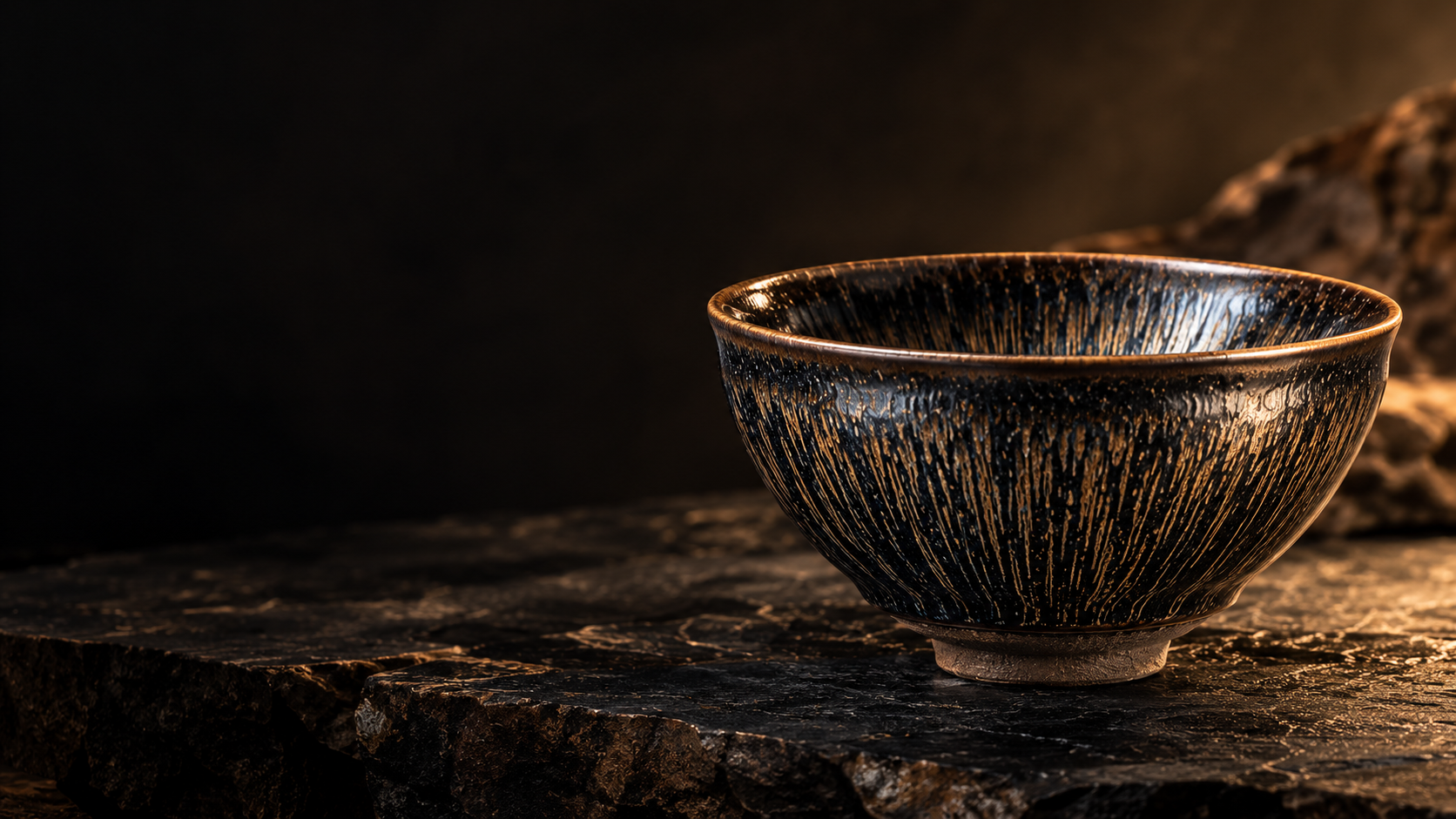
Dark Jian Zhan tea bowl with hare’s-fur-style glaze
← Learning Library
JIAN ZHAN 101

Born from earth.
Transformed by fire.

Jian Zhan is a Chinese tradition of iron-rich, dark-glazed stoneware best known for tea bowls whose remarkable surfaces emerge from the interaction of clay, glaze, heat and atmosphere.

Discover the story ↓
START WITH THE BASICS

What exactly is Jian Zhan?

At its simplest, Jian Zhan is a type of tea bowl associated with Jian ware and the historic kilns of Fujian Province in southeastern China.

The word Jian refers to the historic place and ceramic tradition. Zhan means a small bowl or cup, particularly one used for tea.

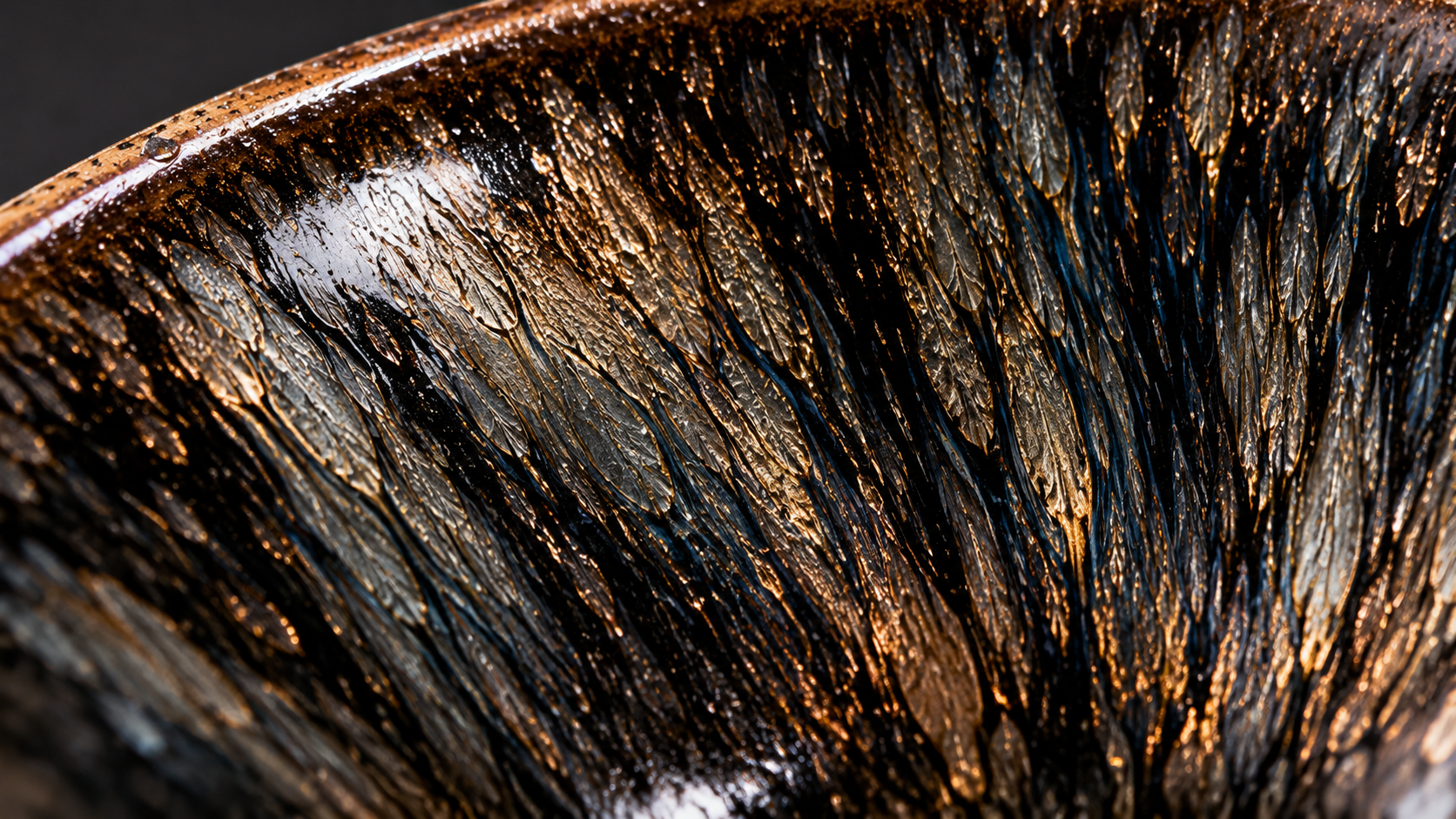
What makes these bowls extraordinary is not elaborate painted decoration. Their visual character comes largely from iron-rich clay and glaze transformed inside the kiln.

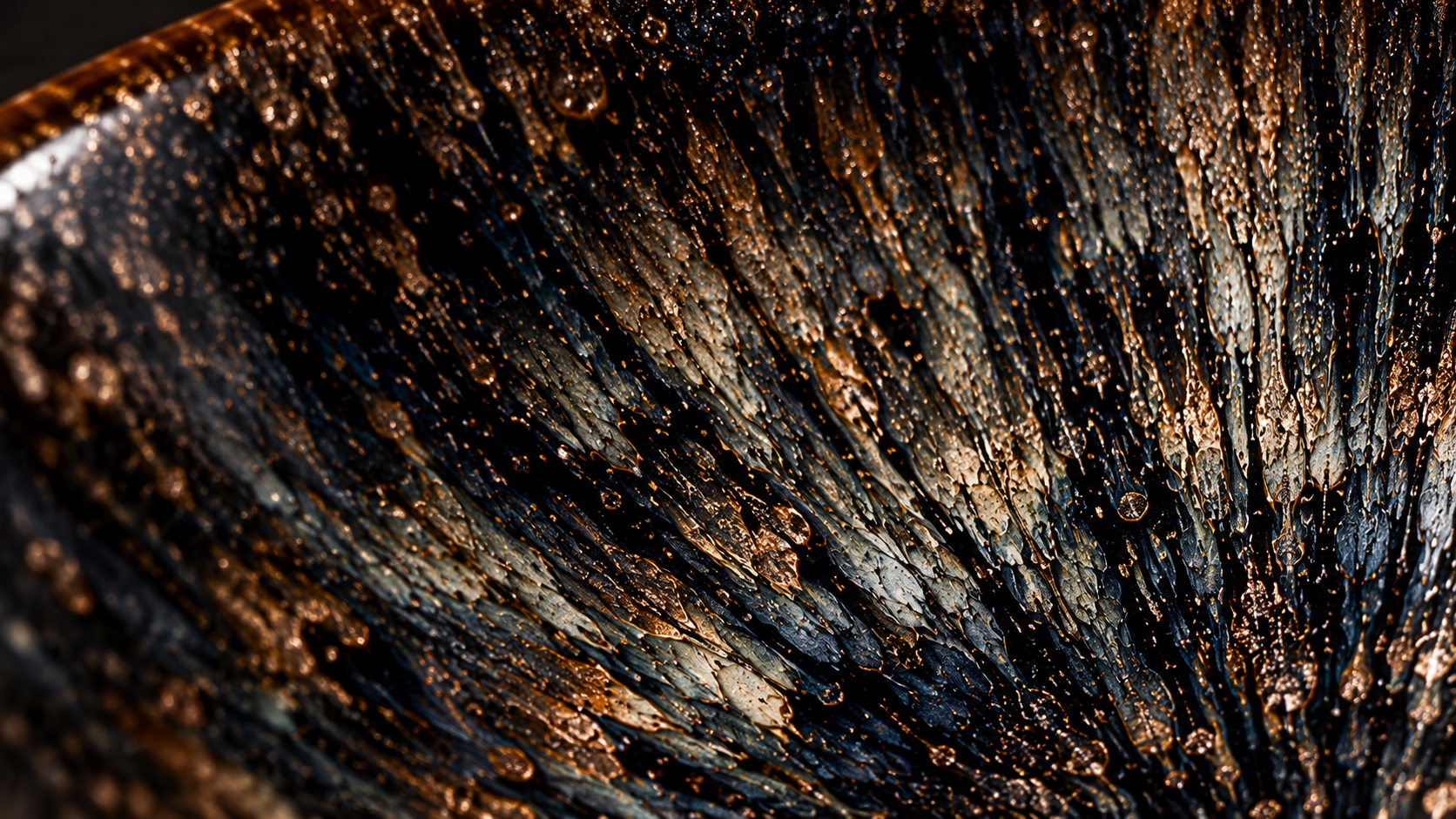
Under intense heat, minerals in the glaze can separate, crystallize and move across the surface, producing patterns that may resemble streaks of fur, shimmering spots, metallic flecks or deep pools of black.
建盏JIÀN ZHǍN
IN TWO CHARACTERS

Jian + Zhan

Jian 建 connects the ware to its historic place of production. Zhan 盏 refers to a small cup or bowl. Together, the name identifies the distinctive tea bowls associated with the Jian kiln tradition.

01
THE ORIGINS

A ceramic tradition more than a thousand years old.

Jian ware developed in Fujian, with production becoming especially important during China's Song dynasty (960–1279).

The historic Jian kiln complex is particularly associated with the area around Shuiji in present-day Jianyang. Kilns there produced enormous quantities of dark-glazed bowls for tea.

Their forms were practical, their clay was rich in iron, and their glazes could produce striking effects during firing. What began as functional ceramic ware became closely connected with the sophisticated tea culture of the Song period.

Educational reconstruction of the historic Jian kiln region in Fujian
A VERY SHORT TIMELINE

From ancient kilns to modern collectors.

10th–13th c.

Song dynasty

Jian tea bowls rise to prominence alongside the sophisticated whisked-tea culture of the Song period.

13th c.+

Influence abroad

Chinese dark-glazed tea bowls reach Japan, where prized examples become known as tenmoku or temmoku.

Later centuries

Production declines

Tea practices and ceramic tastes change, and the great historic period of Jian production comes to an end.

Modern era

The tradition returns

Contemporary makers revive Jian Zhan techniques, combining historical knowledge with modern experimentation.

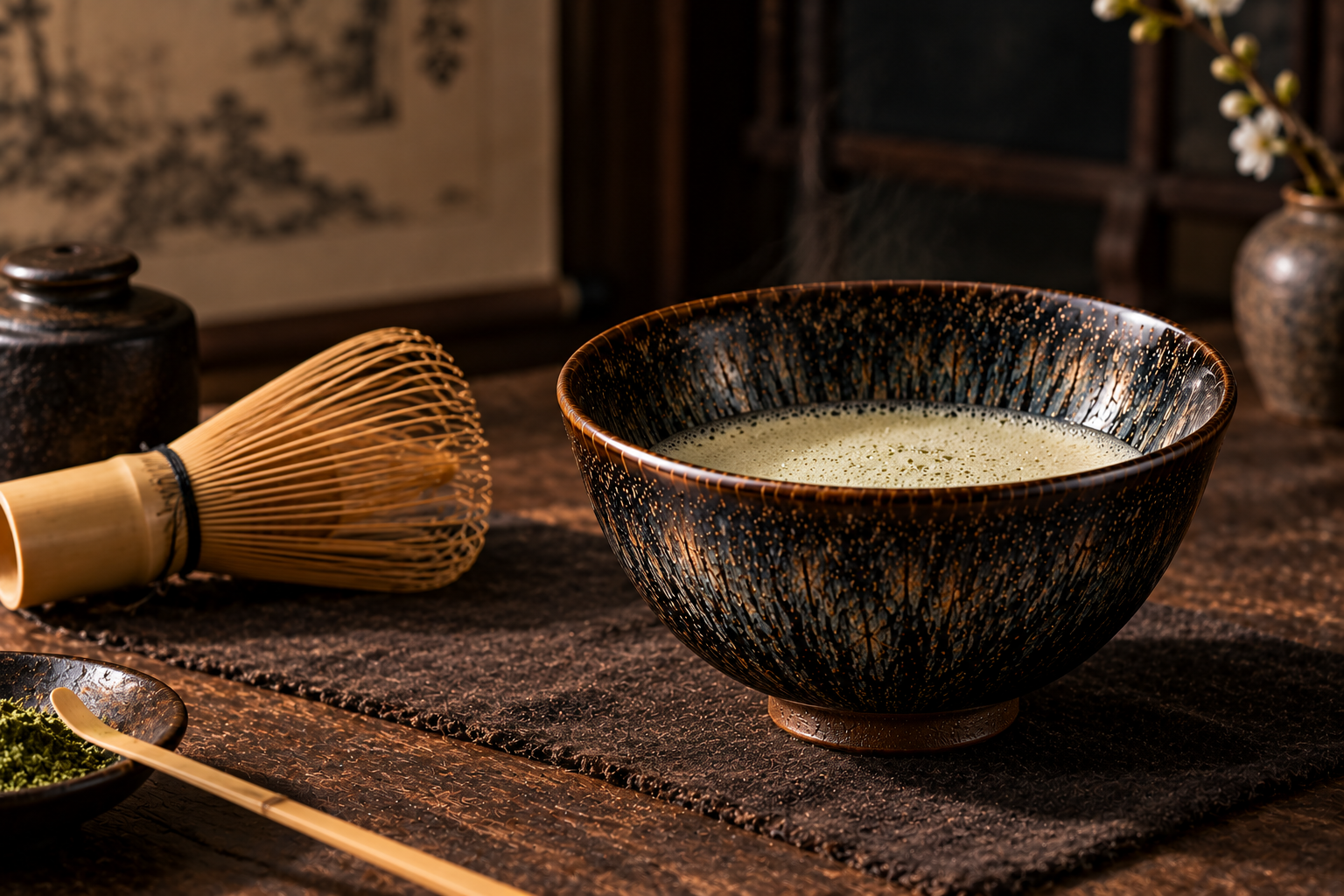
Song-style whisked tea presented in a dark Jian-style bowl
02
TEA CHANGED EVERYTHING

Why were dark bowls so important?

During the Song dynasty, tea was often prepared differently from the loose-leaf infusion familiar today. Finely processed tea could be whisked with hot water, creating a pale foam on the surface.

Against a dark Jian bowl, that light-colored tea and foam stood out dramatically.

THE SIMPLE IDEAPale tea foam + a dark bowl = striking visual contrast.

The bowls were therefore more than beautiful objects. Their appearance was closely connected to how tea was being prepared, judged and appreciated.

Macro detail of a dark iron-rich Jian-style glaze
THE MAGIC IS IN THE FIRING

The pattern is not simply painted onto the bowl.
It emerges in the kiln.

03
EARTH + MINERALS + FIRE

What makes Jian Zhan look like Jian Zhan?

The distinctive appearance comes from a combination of materials and firing conditions rather than painted surface decoration.

01

Iron-rich clay

Traditional Jian bodies are dark, dense stoneware clays with substantial iron content. The exposed foot often reveals the characteristic dark body beneath the glaze.

02

Iron-bearing glaze

Iron in the glaze plays a central role in the dark coloration and in many of the characteristic surface effects collectors associate with Jian Zhan.

03

High-temperature firing

Heat, kiln atmosphere, glaze thickness, cooling and chemistry interact during firing. Small changes can dramatically alter the finished surface.

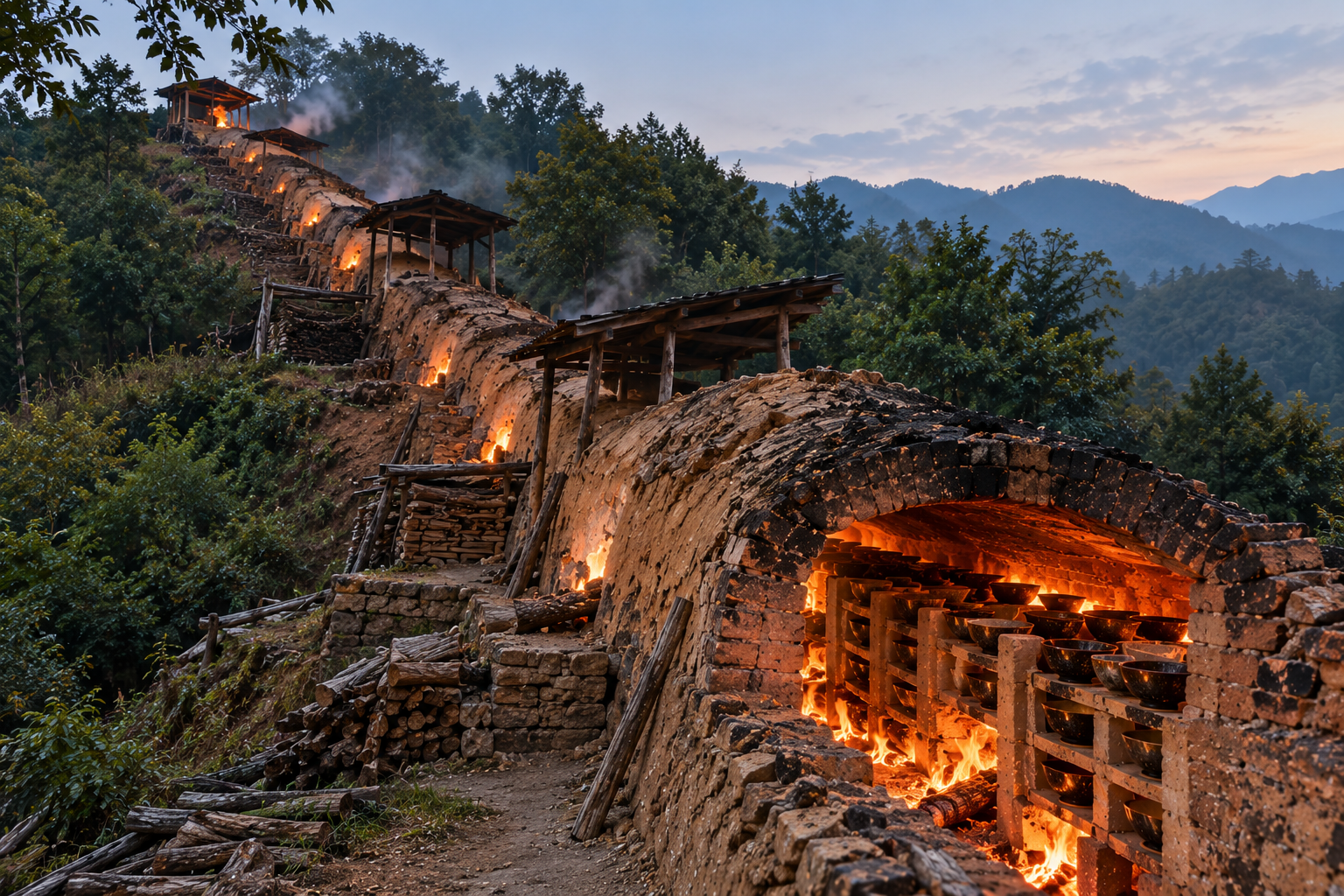
Educational reconstruction of a traditional hillside dragon kiln firing
INSIDE THE KILN

Jian Zhan depends on extreme heat and carefully controlled kiln conditions. Traditional dragon kilns climbed the hillside, creating a long firing chamber in which flame, atmosphere and temperature shaped the finished glaze.

04
THE SURFACES

No two firings behave exactly alike.

Jian Zhan is famous for glaze effects that can range from quiet and almost black to highly dramatic crystalline patterns.

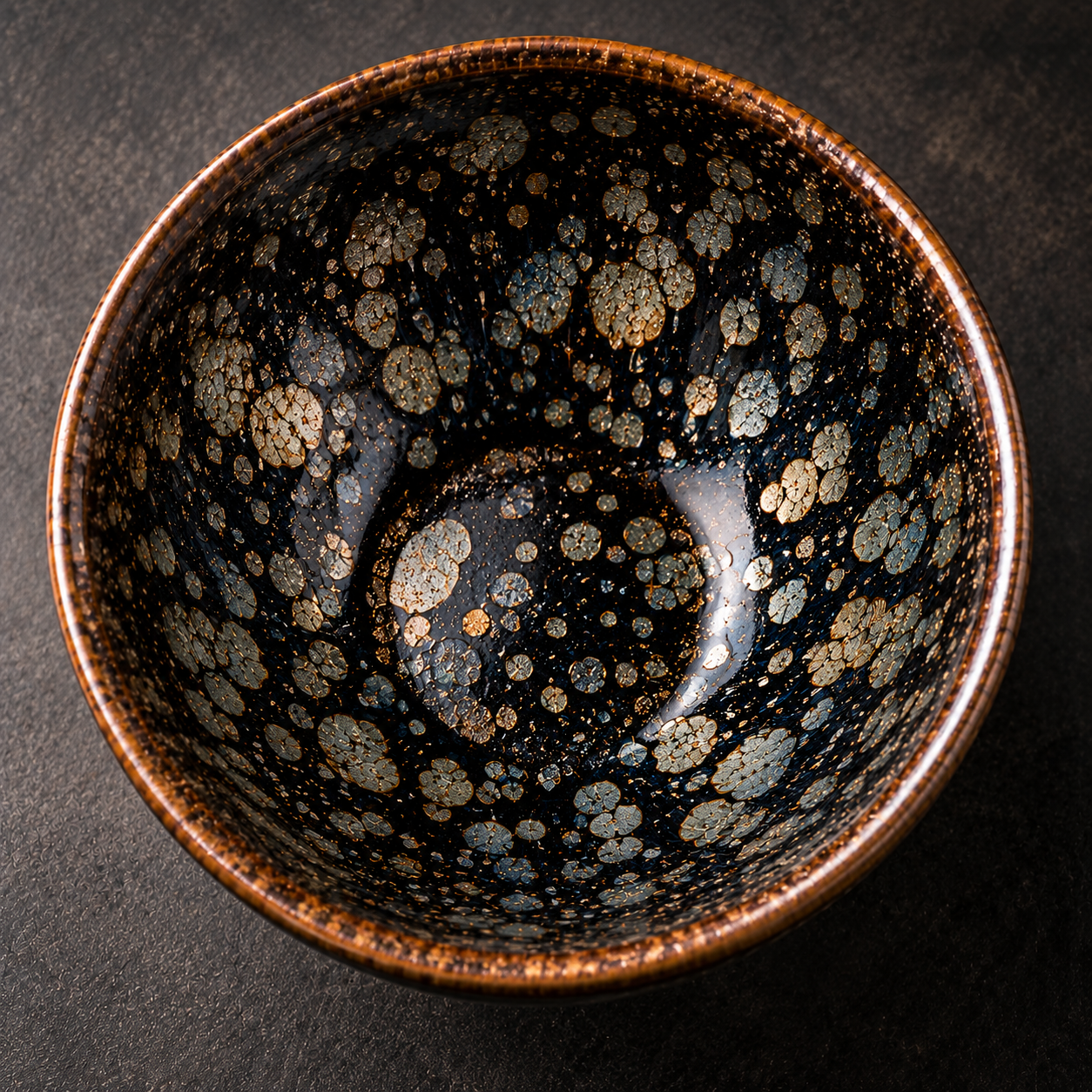
Top-down view of a Jian-style oil spot glaze

Oil Spot

Rounded metallic or crystalline spots distributed across a darker glaze.

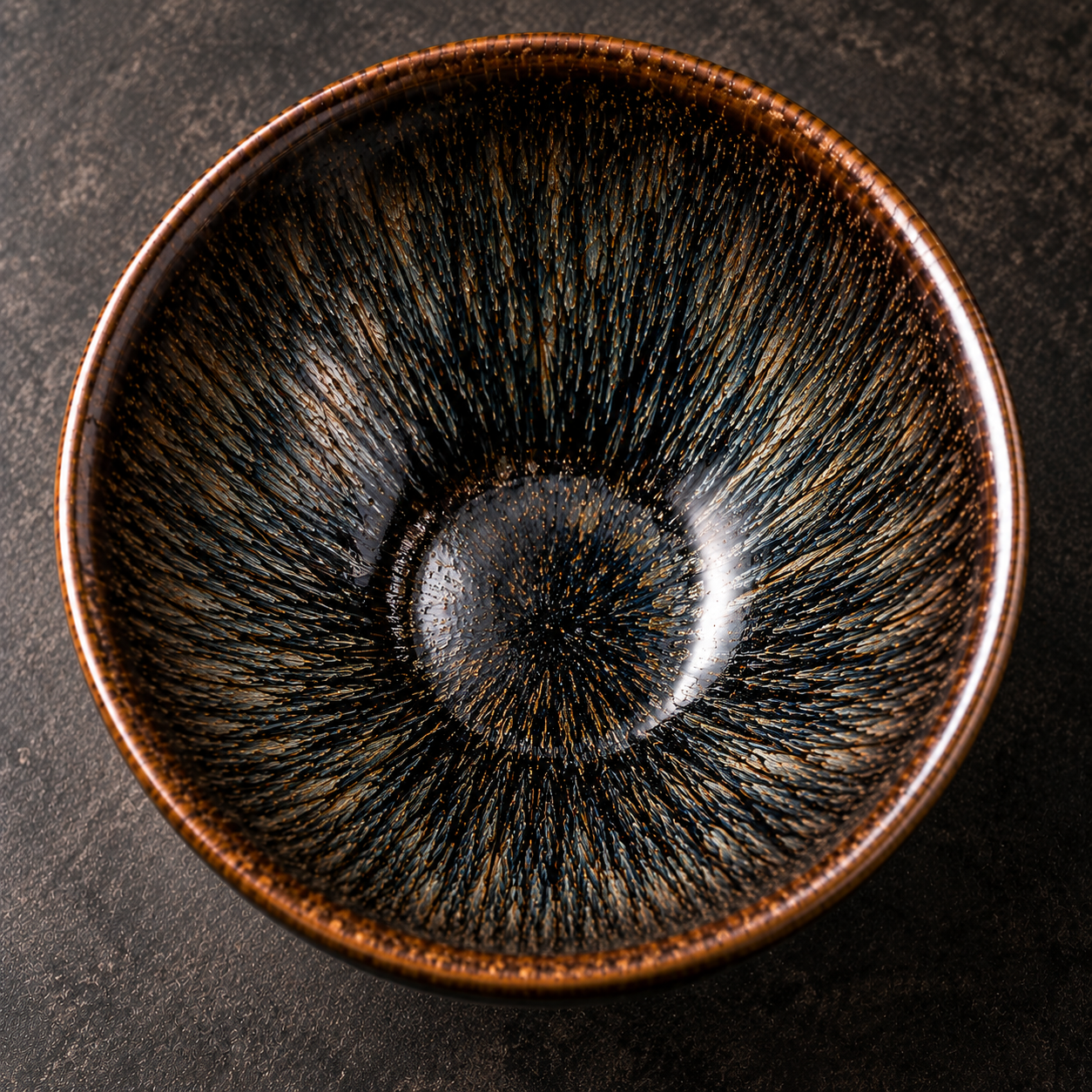
Top-down view of a Jian-style hare’s-fur glaze

Hare's Fur

Fine elongated streaks that can resemble the individual hairs of an animal's coat.

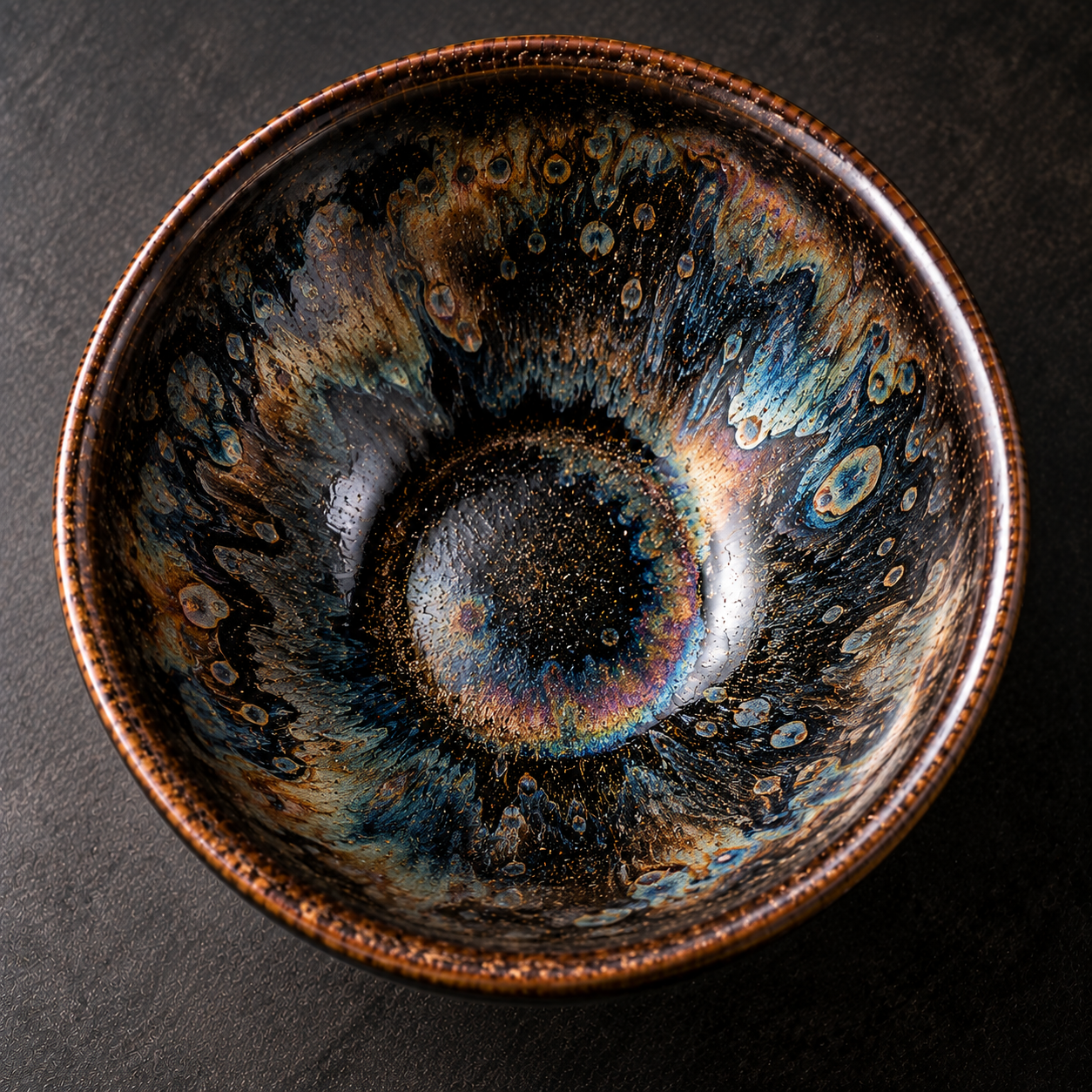
Top-down view of a contemporary yaobian-inspired Jian-style glaze

Yaobian

A term associated with dramatic kiln-transformed effects, sometimes displaying halos, iridescence or unusual optical depth.

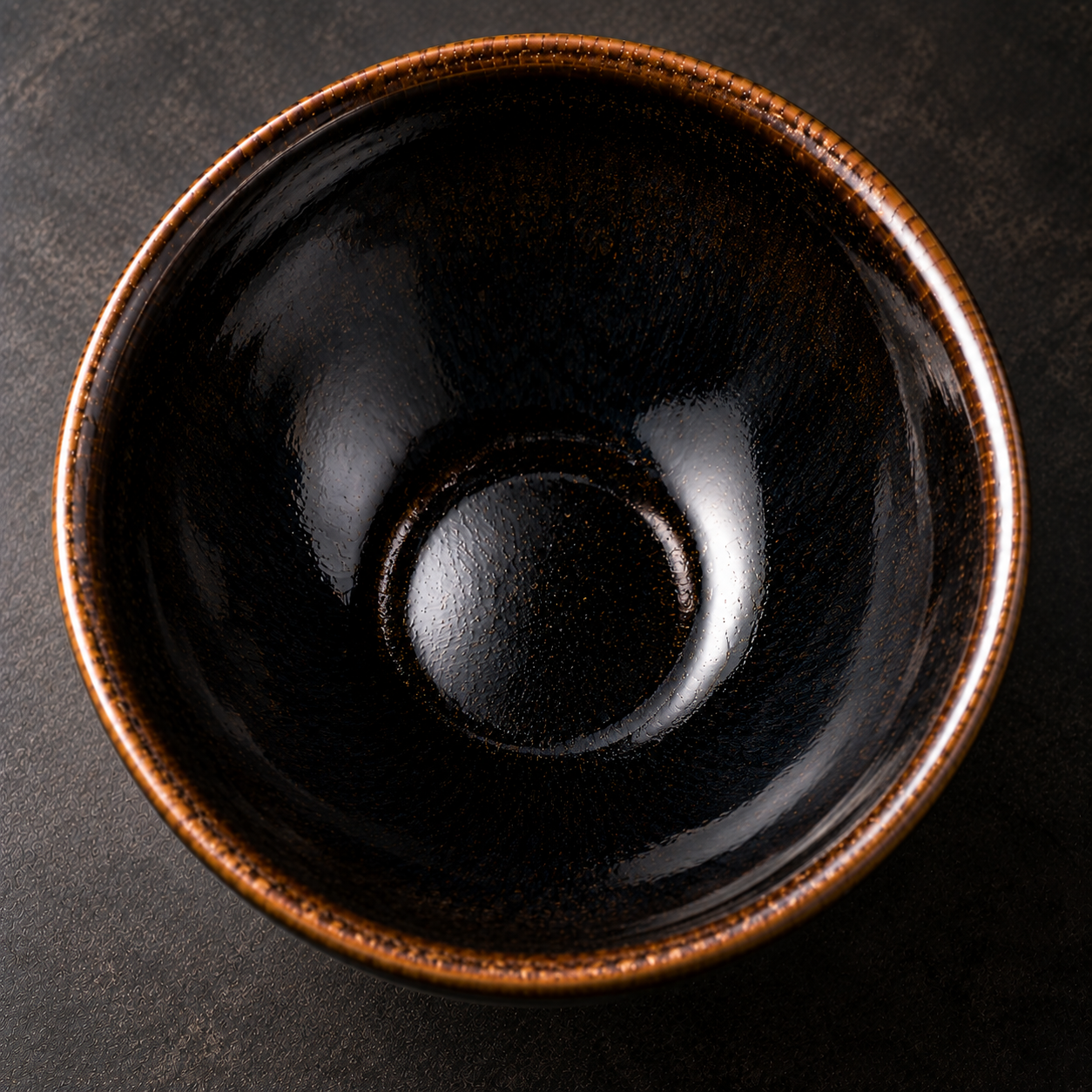
Top-down view of a deep black Wujin-style glaze

Wujin

Deep black or near-black surfaces valued for their restrained, lustrous appearance.

05
LOOK BEYOND THE GLAZE

The bowl itself tells you something too.

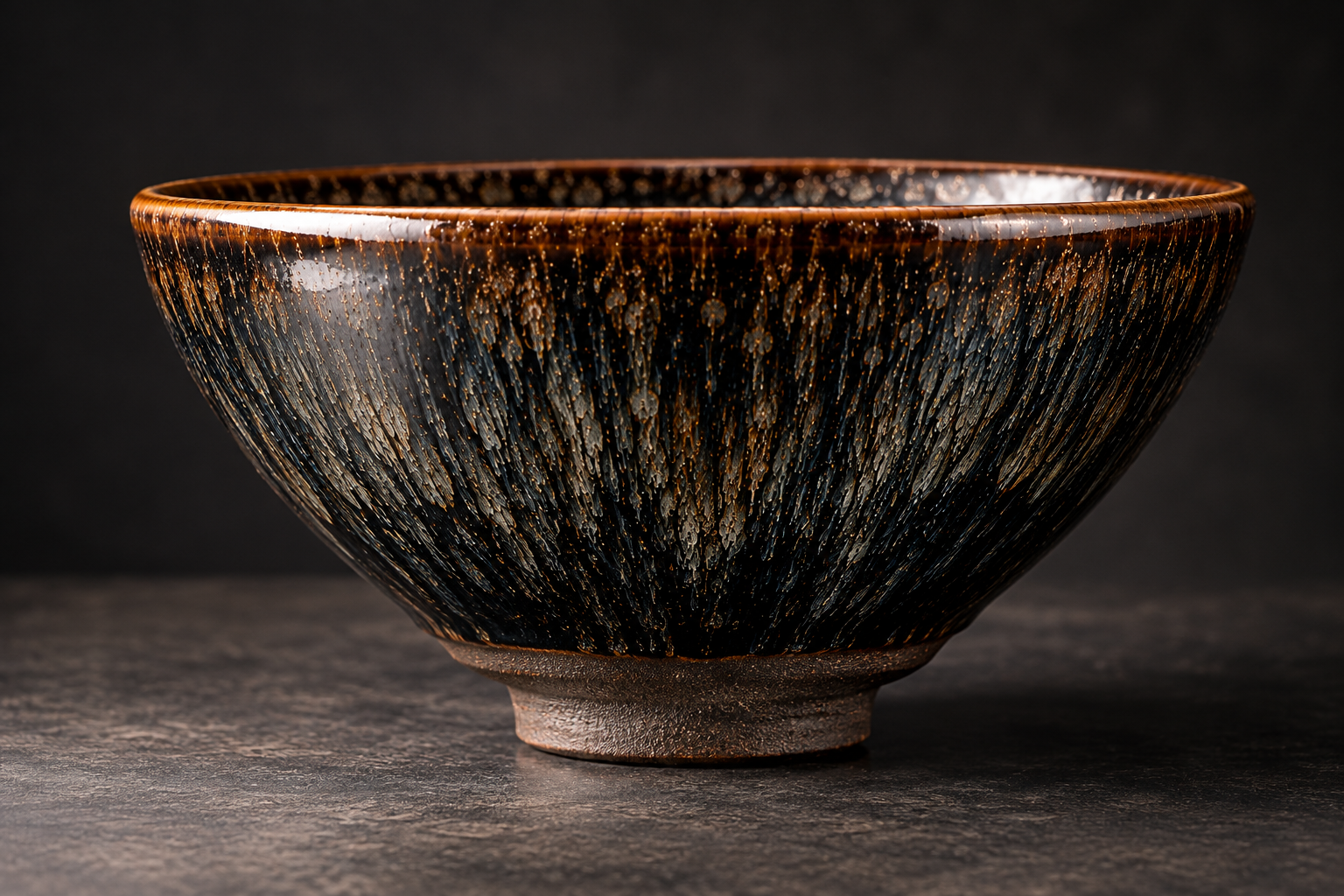
It is easy to focus entirely on the glaze, but collectors also learn to examine the underlying form and construction.

FormProfile, depth, wall shape and proportions influence how a piece looks and feels.
RimThe treatment of the lip can affect both the visual character and the drinking experience.
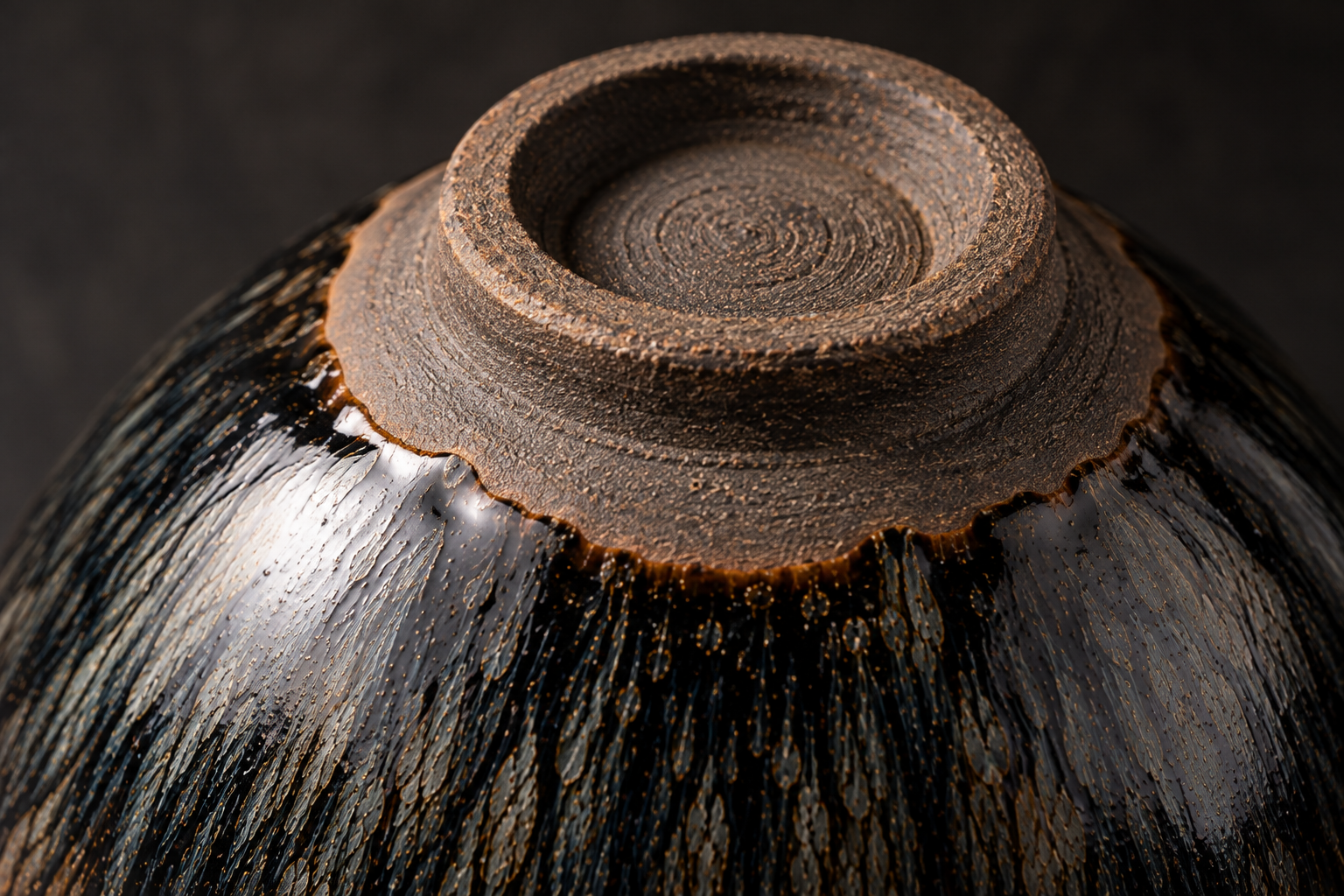
FootThe foot ring reveals clay, trimming and construction details often hidden from the first glance.
Glaze terminationWhere and how the glaze stops near the foot can reveal useful information about the making process.
Explore forms & features →
Side profile of a Jian-style tea bowl
Close-up of a Jian-style bowl foot ring and exposed clay body
06
A LIVING TRADITION

Ancient roots. Modern makers.

The great historic Jian bowls belong to an ancient ceramic tradition, but Jian Zhan is not frozen in the past.

Contemporary potters in Fujian and elsewhere continue working with iron-rich bodies, high-temperature firing and glaze chemistry inspired by historic Jian ware.

Some makers focus on recreating traditional effects. Others push the materials in new directions, producing surfaces and forms that would not necessarily be mistaken for Song-dynasty ware.

That distinction matters: historic Jian ware and modern Jian Zhan are connected traditions, but they are not the same thing.

07
DEVELOP YOUR EYE

Five things to notice when you pick up a bowl.

You do not need to become an expert overnight. Start by slowing down and looking at the same few things every time.

01The glaze

Look at pattern, depth, reflectivity, color and how the surface changes under different light.

02The form

Notice the profile, proportions and how the shape feels in your hands.

03The foot

Turn the bowl over. The exposed clay and foot ring are part of the story.

04The maker

Learn who produced the piece and what information accompanies it.

05Your reaction

Technical knowledge matters, but collecting also begins with what genuinely draws your attention.

PUT YOUR EYE TO WORK

Now look at some bowls.

Explore pieces offered by collectors and start noticing the glazes, forms and details you just learned about.

Explore the Marketplace →